Material guide
Wood veneer
Wood veneer in furniture: Gives authentic wood grain with more stable panel geometry than solid timber alone.
4 product families
6 options
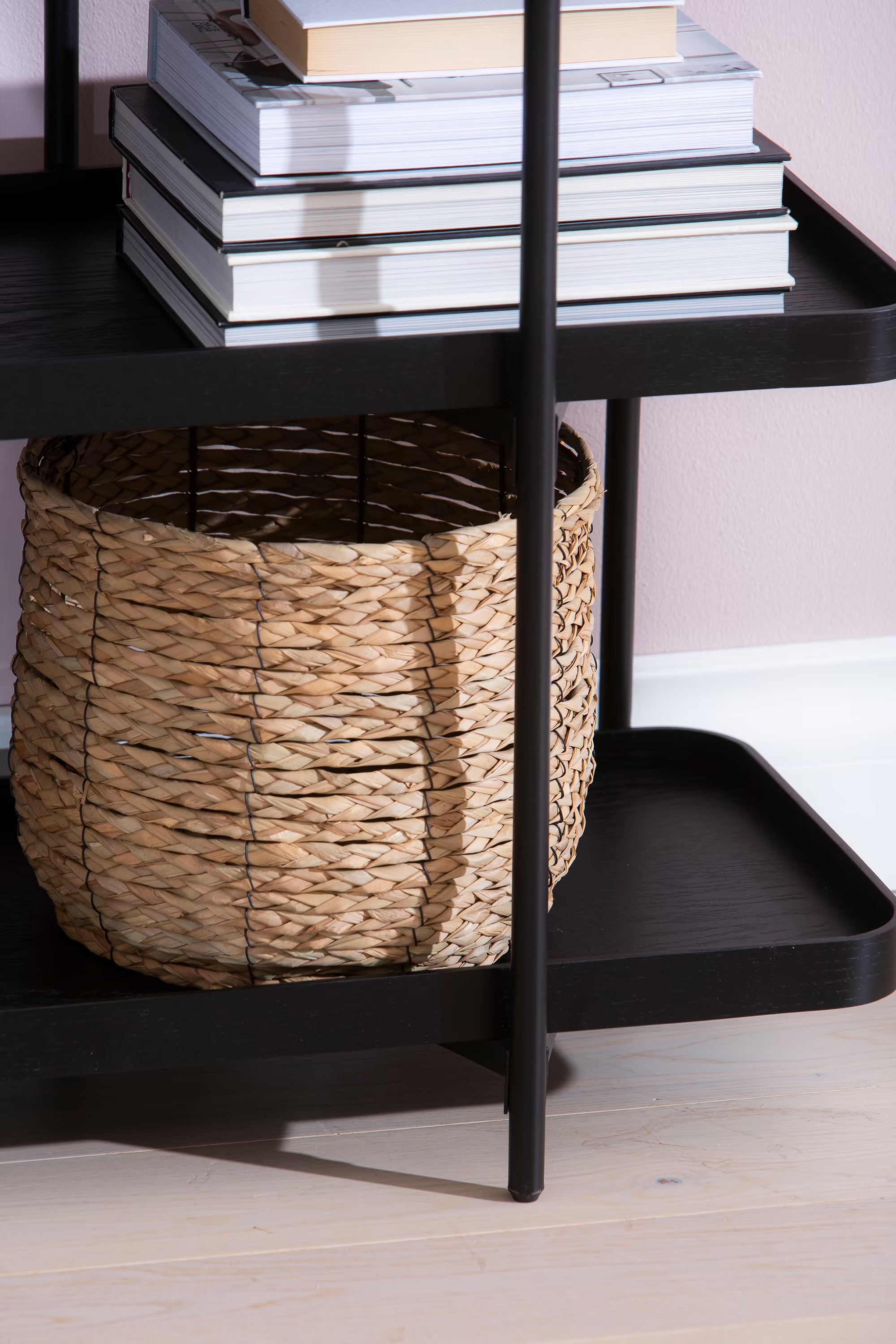
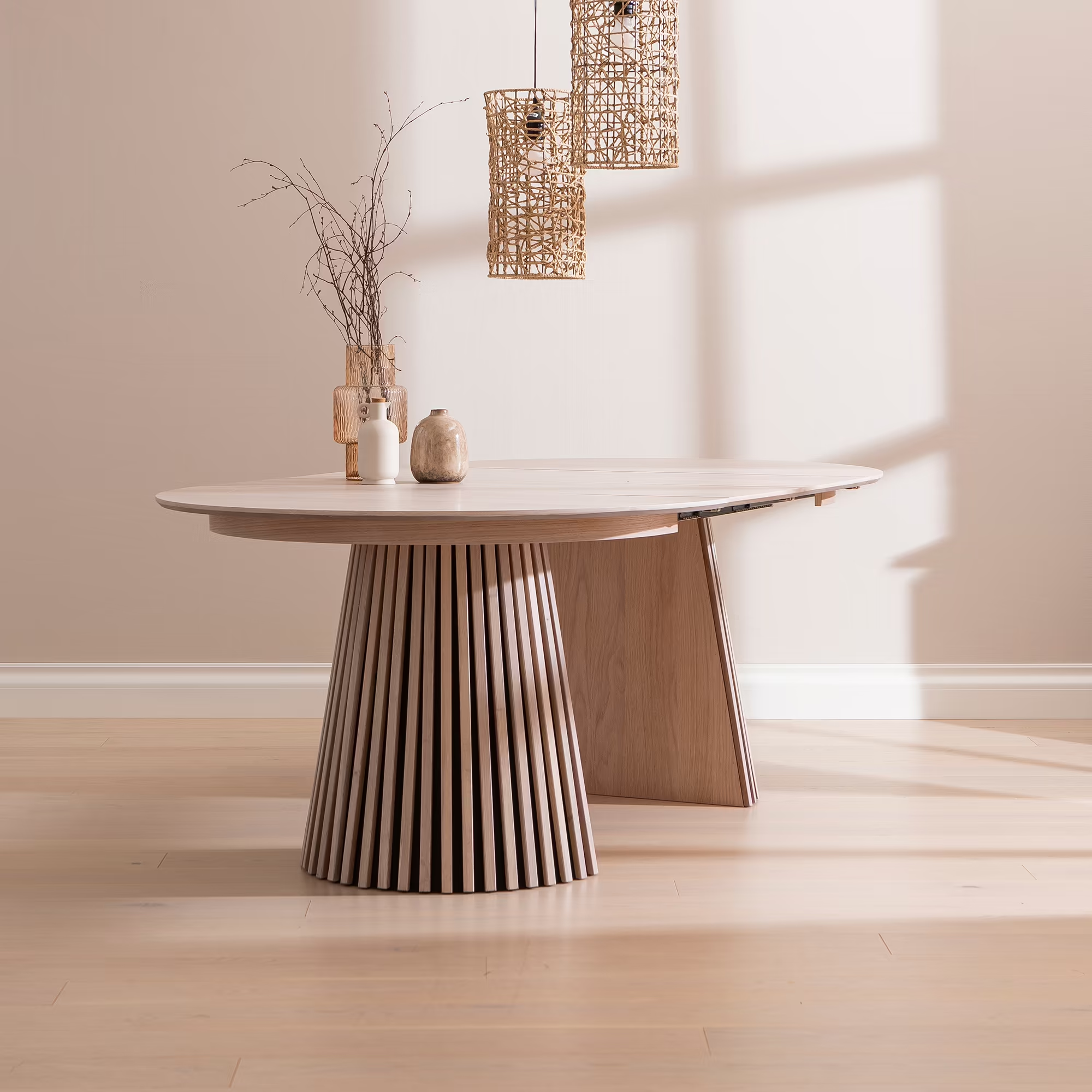
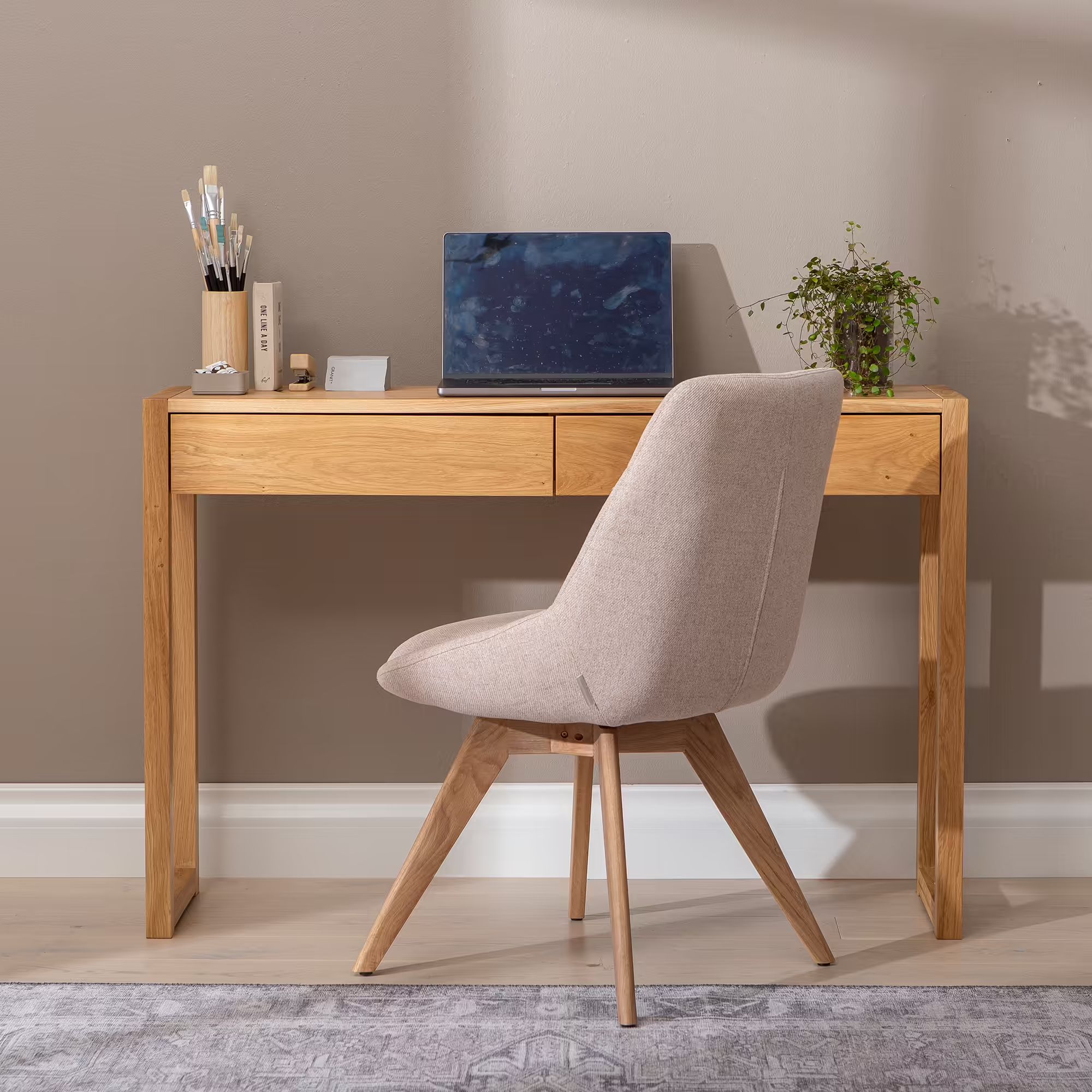
Wood veneer appears across 4 product families and 6 options, especially on Cabinets Display, Chaise Sofas, Console Tables and Dining Tables.
Chemistry and structure
Wood veneer uses genuine wood as a surface skin rather than as the full thickness. That preserves real grain, pore structure and tonal variation while relying on a more stable substrate beneath.
The engineering benefit is efficiency and flatter large panels. The limit is thickness: once the veneer is damaged through, repair options are much narrower than with solid wood.
How it behaves in furniture
Veneer is ideal for broad panels such as cabinet faces, shelving and table tops where the design wants true wood character without full solid-wood cost and movement.
Its success depends heavily on the substrate. A veneered MDF panel behaves differently from a veneered plywood panel, especially around moisture and edge durability.
Thermal and comfort behaviour
Veneer gives the tactile impression of wood on the surface, but thermal and moisture behaviour still depend heavily on the core below it.
That means the face may feel warmer than metal at touch while long-term stability can still be limited by MDF or particle-board swelling underneath.
Care and design watch-outs
Moisture and wear note: Surface behaviour depends on both the veneer finish and the moisture sensitivity of the core below it.
Care note: Treat as real wood on the face, but avoid deep sanding because the veneer layer is thin.
Strengths
- real wood appearance with panel stability
- efficient use of premium timber
- good for large flat surfaces
Watch-outs
- thin repair margin
- edges and corners chip more easily
- core material still controls moisture tolerance
Recycling and service life
- Recycling in Finland
- Use municipal bulky-furniture or treated-board handling unless the local operator explicitly accepts the specific veneered panel.
- Expected wear profile
- Surface can age attractively, but edge chips, water ingress and thin repair margin remain key limitations.
- Retail warranty note
- Material guidance does not extend the retailer warranty. Unless a product page explicitly states otherwise, keep the practical customer expectation at a 2-year retail warranty window.
Finland-first sorting baseline: veneered panels usually belong to municipal bulky-furniture or treated-board style acceptance, not a clean wood stream unless the local operator explicitly allows it.
Because veneer is bonded to a substrate, customer guidance should treat the part as a composite furniture panel first and as wood only second.
A good veneer surface can age beautifully, but the repair margin is thin. Chips, deep scratches and water ingress around edges expose the limitations quickly.
Real durability therefore depends on both the veneer finish and the substrate quality underneath.
Related specifications
- Oak veneer
- Walnut veneer
- Veneered panel
Browse related products