Material guide
Silicate
Silicate in furniture: Hard, heat tolerant and visually crisp, with a dense mineral feel.
1 product family
1 option
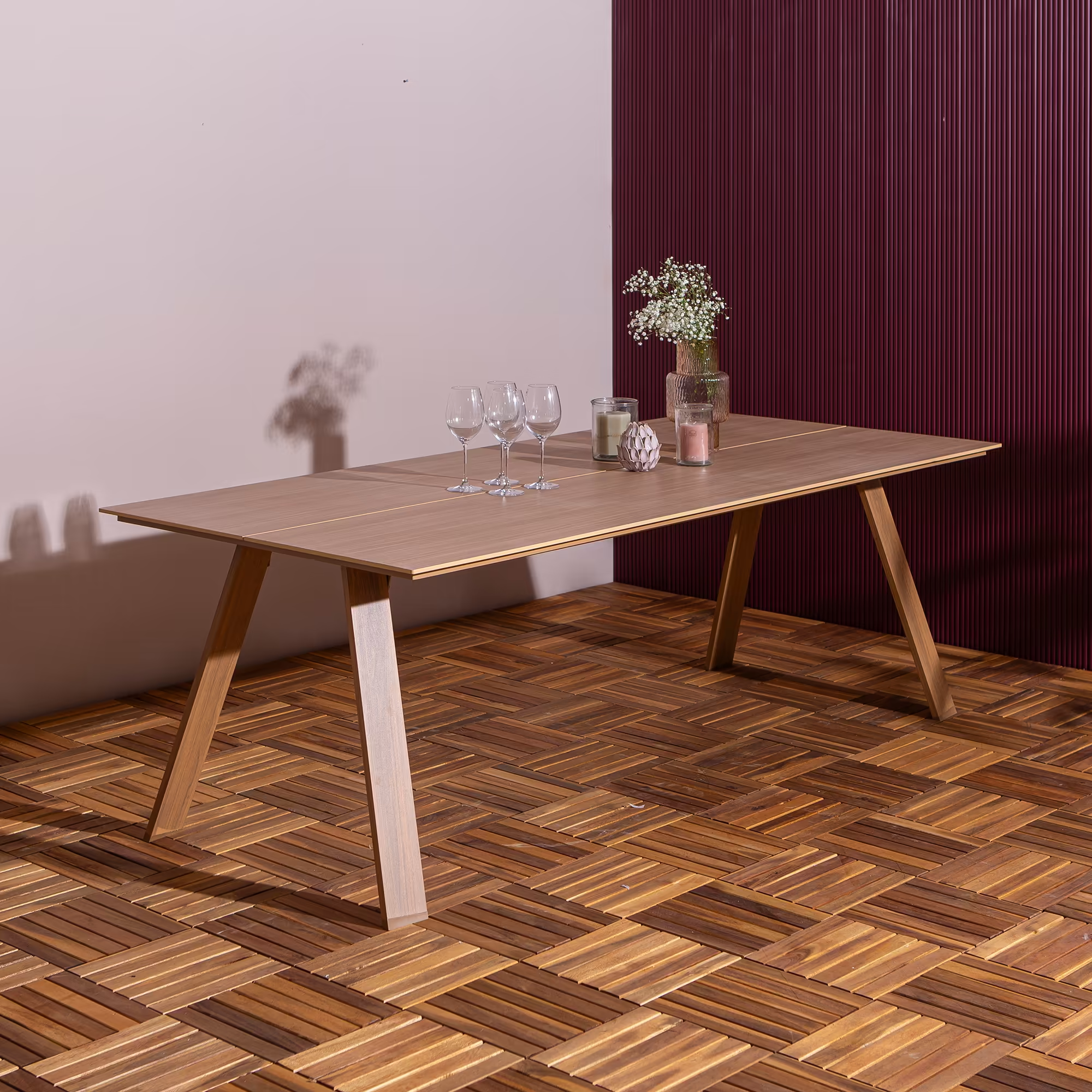
Silicate appears across 1 product family and 1 option, especially on Outdoor Dining Tables.
Chemistry and structure
Silicate-labelled furniture surfaces usually refer to mineral-heavy ceramic or stone-like slab materials rather than soft organic substrates. Their chemistry gives them hardness, low porosity and good resistance to heat and staining.
What they do not lose is brittleness. Mineral-rich tops can outperform laminate in scratch and heat resistance, yet a concentrated edge impact can still chip them.
How it behaves in furniture
They are strong tabletop materials where the user wants a premium stone expression with easier wiping and better everyday resistance than many porous natural stones.
The design trade-off is weight and edge sensitivity. The base and handling quality become important because the top itself is unforgiving if knocked.
Care and design watch-outs
Moisture and wear note: Typically low-porosity and easy to wipe, but joints and edge detailing still matter.
Care note: Protect corners from impact and avoid assuming the material is unbreakable because mineral slabs remain brittle at edges.
Strengths
- hard wearing surface
- good stain and heat resistance
- premium stone-like expression
Watch-outs
- edge brittleness
- heavy construction
- performance depends on support and handling
Browse related products