Material guide
Plywood
Plywood in furniture: Stronger and more dimensionally stable than many fibre or particle boards.
9 product families
35 options
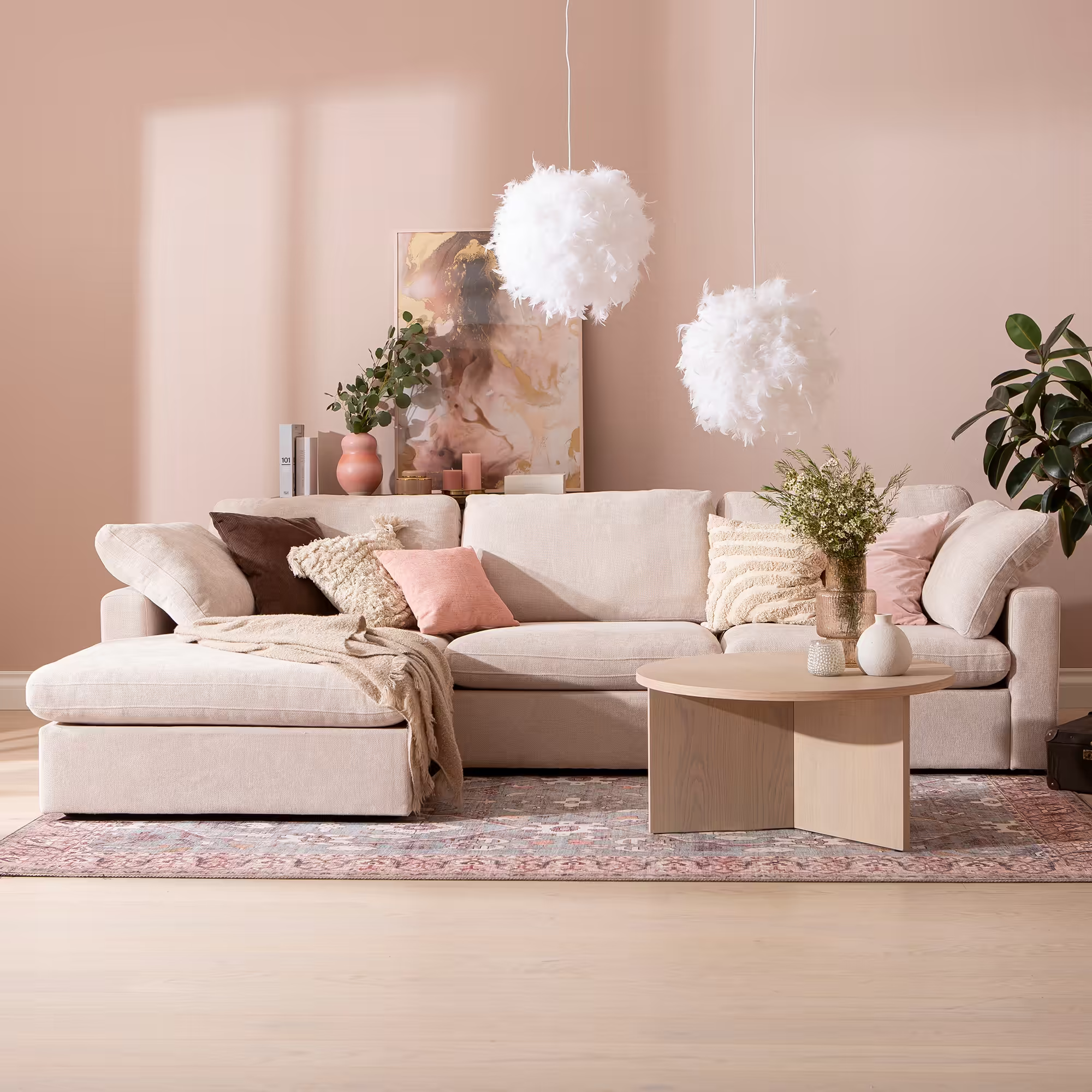
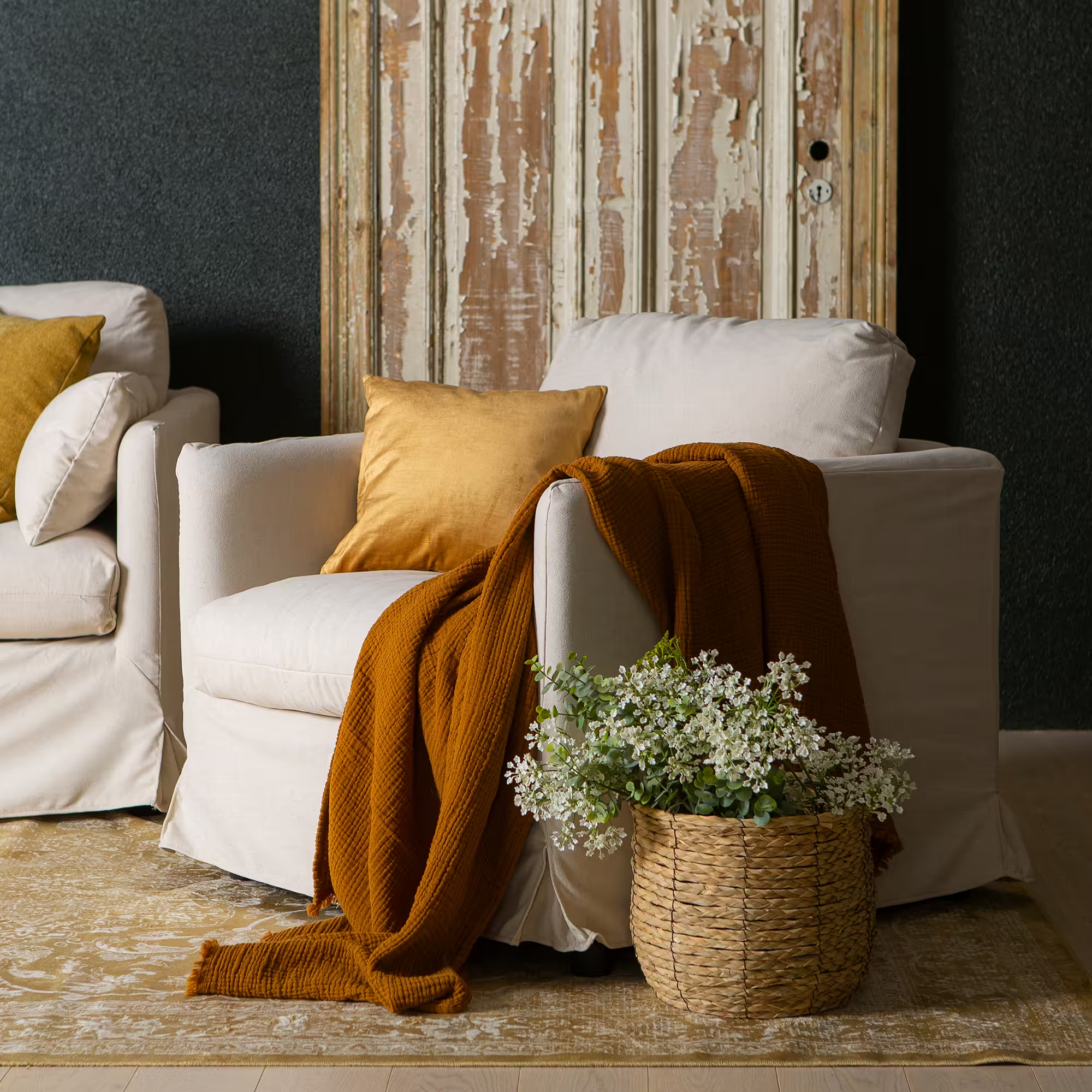
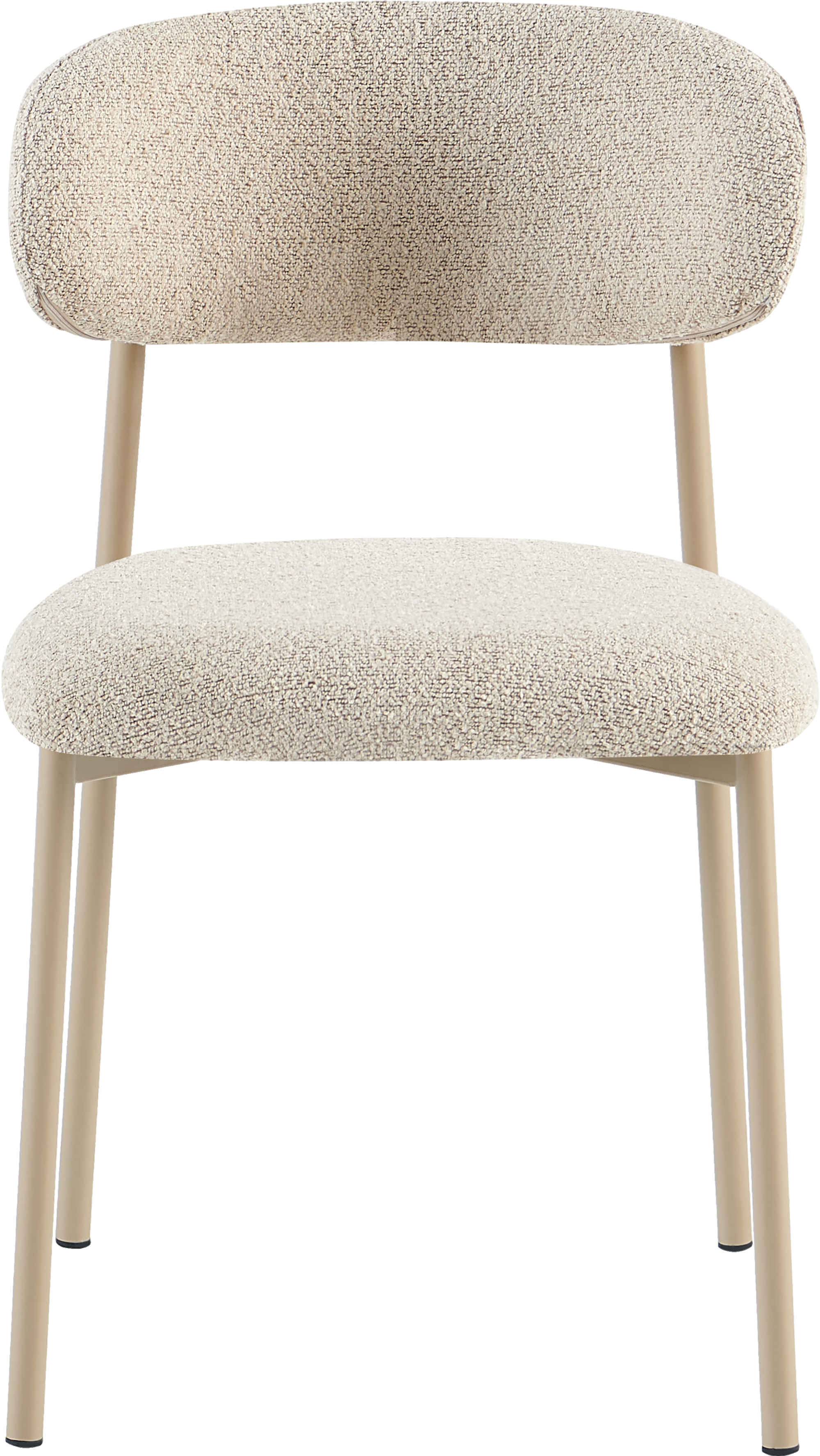
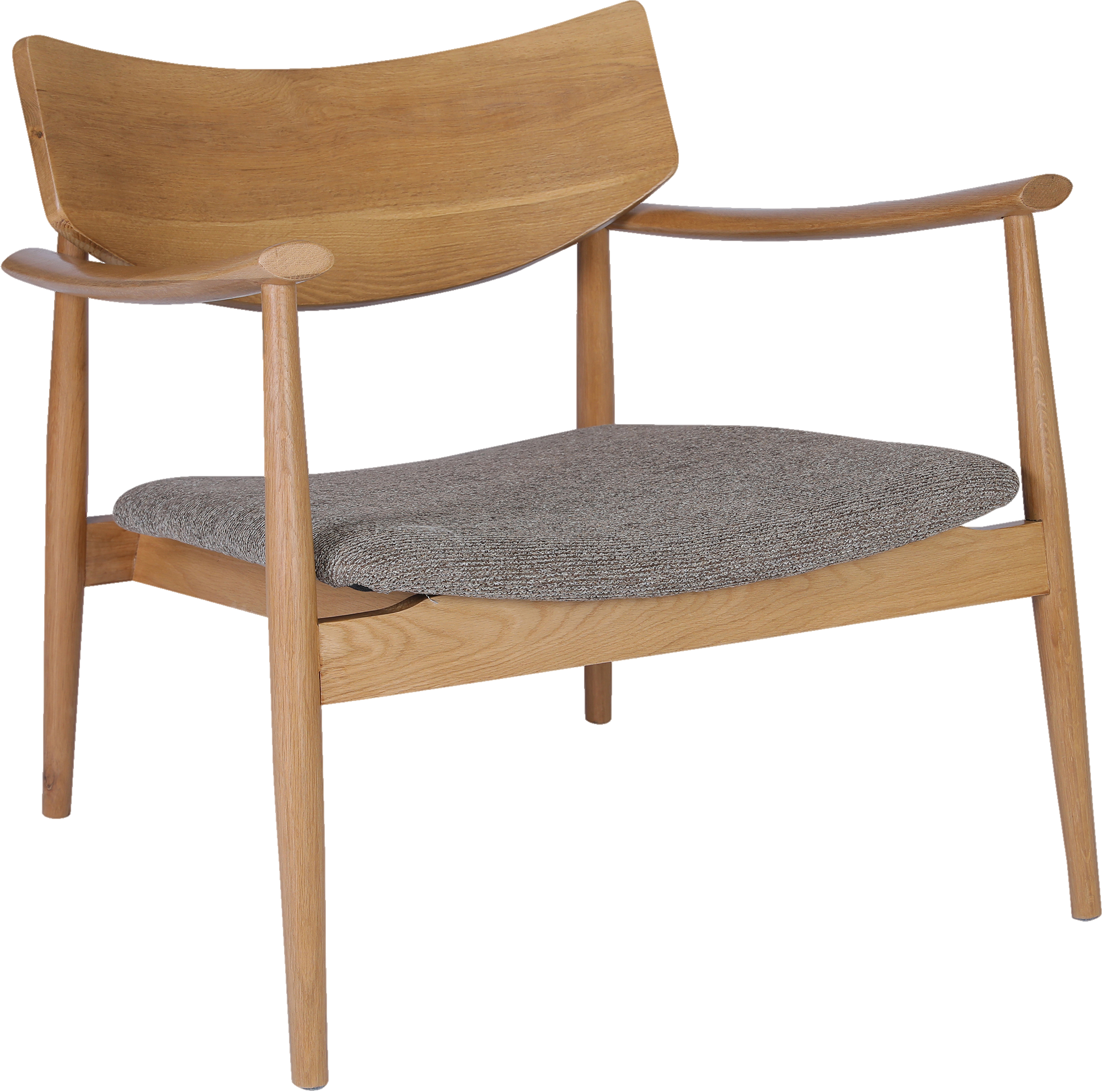
Plywood appears across 9 product families and 35 options, especially on 3-Seater Sofas, 4-Seater Sofas, Armchairs, Chaise Sofas, Corner Sofas and Dining Chairs and 3 more.
Chemistry and structure
Plywood is built from real wood veneers layered with alternating grain. That cross-lamination reduces directional movement and spreads load more evenly than single-grain timber sheets.
Because the face and core are wood, plywood still behaves more like a natural wood product than a fibreboard. It holds screws better and usually tolerates humidity swings more gracefully.
How it behaves in furniture
It is one of the most versatile panel materials in furniture, suitable for seats, table structures, carcasses and curved shells when the grade is chosen well.
Plywood is especially useful where designers need a wood-based panel that is lighter and stronger than particle board but more stable and scalable than solid wood alone.
Thermal and comfort behaviour
Plywood behaves more like wood than like foam or metal in thermal terms. It feels relatively neutral-to-warm at touch and does not trap body heat the way dense foams do.
The layered build improves dimensional stability, but humidity and repeated wet-dry cycles still matter more than pure thermal expansion in long-term use.
Care and design watch-outs
Moisture and wear note: Better moisture resistance than MDF or particle board, but still not immune if edges stay wet.
Care note: Seal exposed edges when needed and keep the finish intact in demanding environments.
Strengths
- good strength-to-weight ratio
- better screw holding than particle board
- stable cross-laminated structure
Watch-outs
- edge plies may show or splinter
- quality varies by veneer grade and glue line
- needs protection in prolonged wet exposure
Recycling and service life
- Recycling in Finland
- Use municipal bulky-furniture or the local wood route depending on finish, glue system and operator rules.
- Expected wear profile
- Often stronger and more forgiving than fibreboards, with edge chipping and finish wear as common ageing signs.
- Retail warranty note
- Material guidance does not extend the retailer warranty. Unless a product page explicitly states otherwise, keep the practical customer expectation at a 2-year retail warranty window.
Finland-first sorting baseline: plywood furniture parts generally belong to municipal bulky-furniture or local wood acceptance depending on glue lines, coatings and local instructions.
If the plywood is veneered, painted, upholstered or fixed to metal hardware, the safest customer-facing route is municipal bulky-waste handling unless local guidance explicitly allows a cleaner wood stream.
Good plywood usually outperforms MDF and particle board in screw holding, impact tolerance and moisture robustness, though edge quality and glue quality matter.
Typical wear shows as chipped edges, surface finish wear and moisture stress at exposed laminations rather than sudden general collapse.
Related specifications
- Plywood frame
- Bent plywood shell
- Cross-laminated panel
Browse related products