Material guide
Particle board
Particle board in furniture: Flat and economical, with acceptable bulk for hidden structures and faced panels.
3 product families
47 options
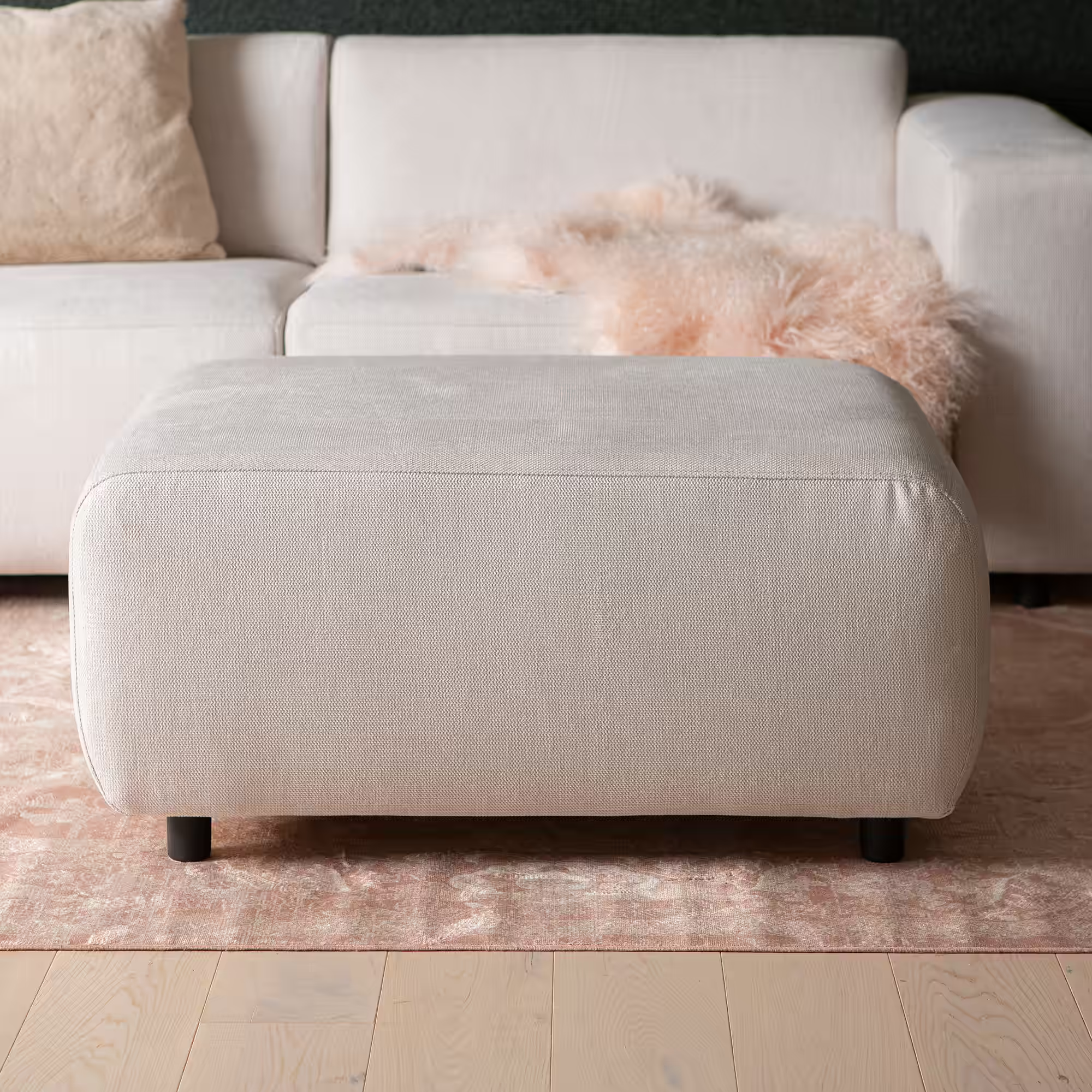
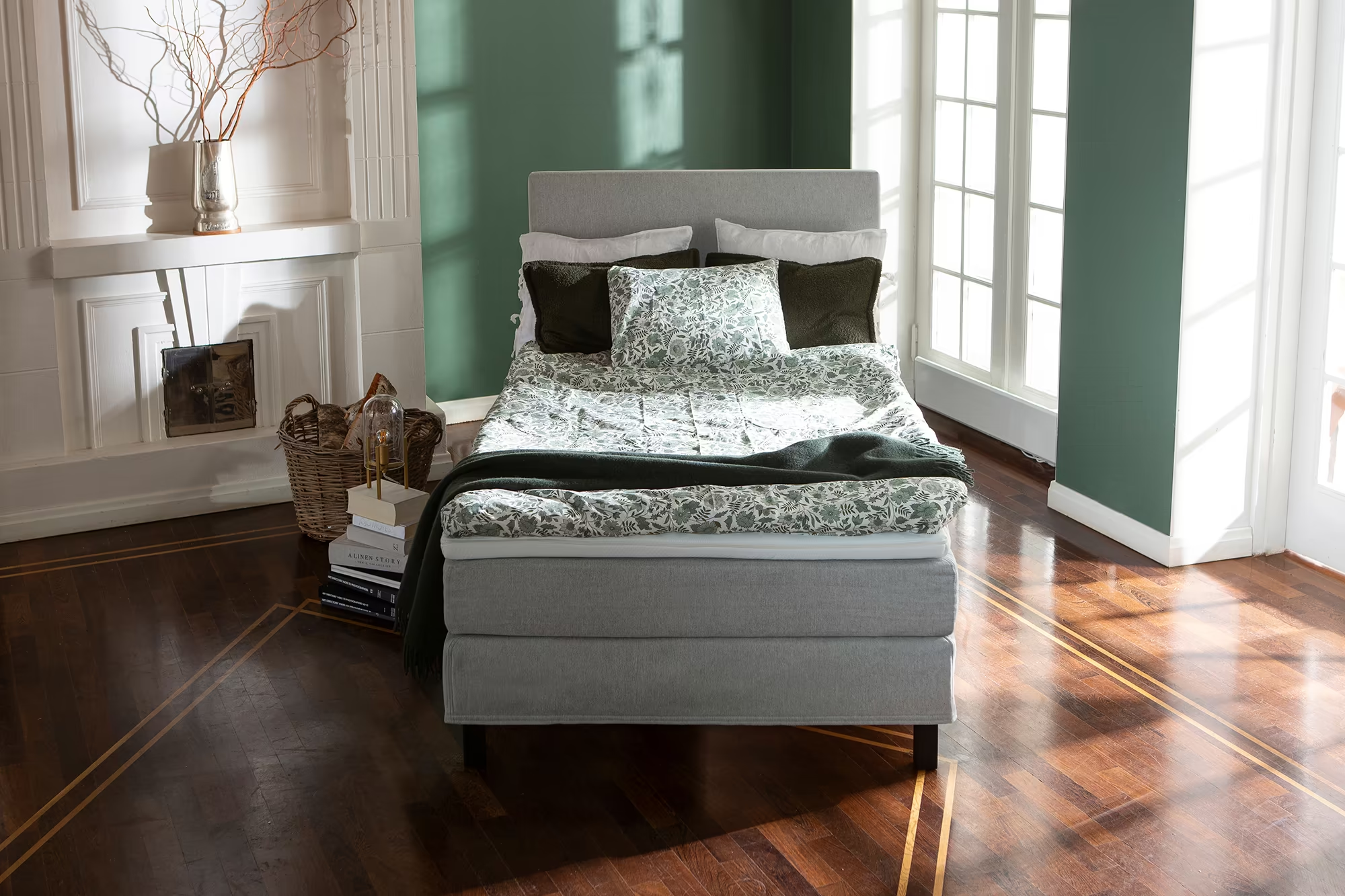
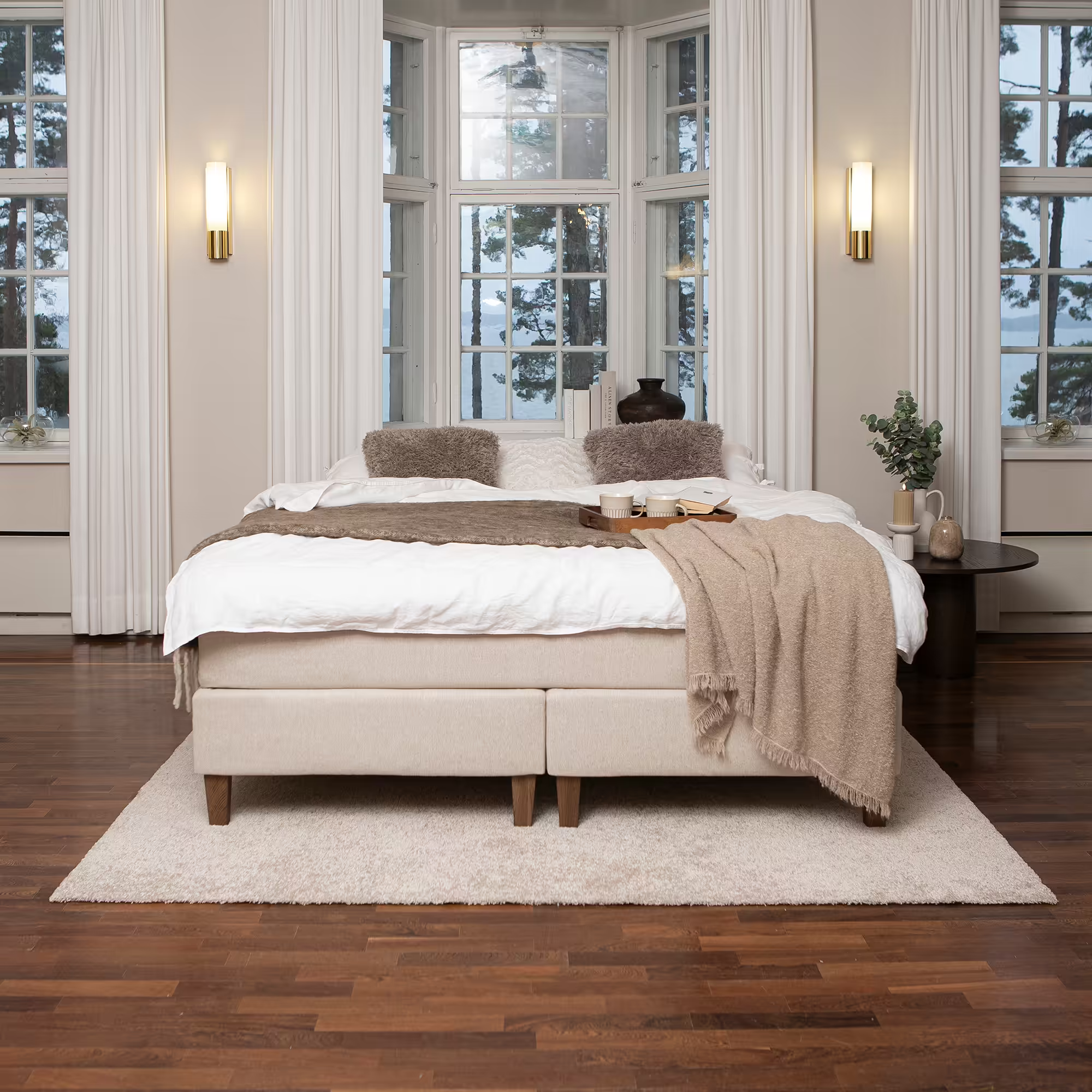
Particle board appears across 3 product families and 47 options, especially on 3-Seater Sofas, Chaise Sofas, Continental Beds, Corner Sofas and Footstools.
Chemistry and structure
Particle board is made from wood chips and particles bound with resin under pressure. It is efficient and economical, which is why it is common in secondary structures and cost-sensitive furniture.
Compared with plywood or solid wood it has weaker screw holding, especially at edges, and it has no natural long fibres to resist moisture-driven swelling.
How it behaves in furniture
Inside upholstered furniture it can work as a flat support element where it stays dry and hidden. In cabinet and table applications it usually needs a melamine, veneer or laminate face to become a finished surface.
The main caution is exactly the one you highlighted: particle board does not tolerate moisture well. Bathrooms, covered terraces and wet floor cleaning are hard on exposed edges and joints.
Thermal and comfort behaviour
Particle board is not a heat-storing comfort layer. It behaves as a structural panel with modest tactile temperature response compared with metal, and far less heat retention than dense foam.
Its environmental weakness is again moisture plus temperature cycling at vulnerable edges. Swelling and joint loosening matter more than thermal expansion itself.
Care and design watch-outs
Moisture and wear note: Poor moisture tolerance: when water enters, the board swells and usually does not recover.
Care note: Keep edges sealed and avoid wet mopping or persistent condensation on exposed particle-board components.
Strengths
- low cost
- flat stable panels in dry interiors
- efficient use of wood residue
Watch-outs
- does not tolerate moisture well
- edge screw holding is modest
- swelling is often permanent once wet
Recycling and service life
- Recycling in Finland
- Use municipal bulky-furniture or treated-board handling; do not place in packaging streams.
- Expected wear profile
- Serviceable in dry interiors, but very vulnerable to edge swelling, corner impacts and loosening fixings.
- Retail warranty note
- Material guidance does not extend the retailer warranty. Unless a product page explicitly states otherwise, keep the practical customer expectation at a 2-year retail warranty window.
Finland-first sorting baseline: particle-board furniture and offcuts usually belong to municipal bulky-furniture or treated-board acceptance, not packaging streams.
If laminate, veneer, upholstery or hardware is still attached, route the whole part through municipal bulky-waste handling unless the local operator gives a cleaner separated-board instruction.
Particle board durability is strongly edge-dependent. Protected inside a dry carcass it can last well, but wet mopping, floor moisture and impacts shorten life quickly.
Once swelling starts, recovery is usually poor. That makes local water damage the most common end-of-life trigger.
Related specifications
- Particle-board core
- Melamine board
- Budget carcass panel
Browse related products