Material guide
Nonwood
Nonwood in furniture: Stable and low-maintenance compared with natural wood, but exact performance depends on the composite recipe.
1 product family
6 options
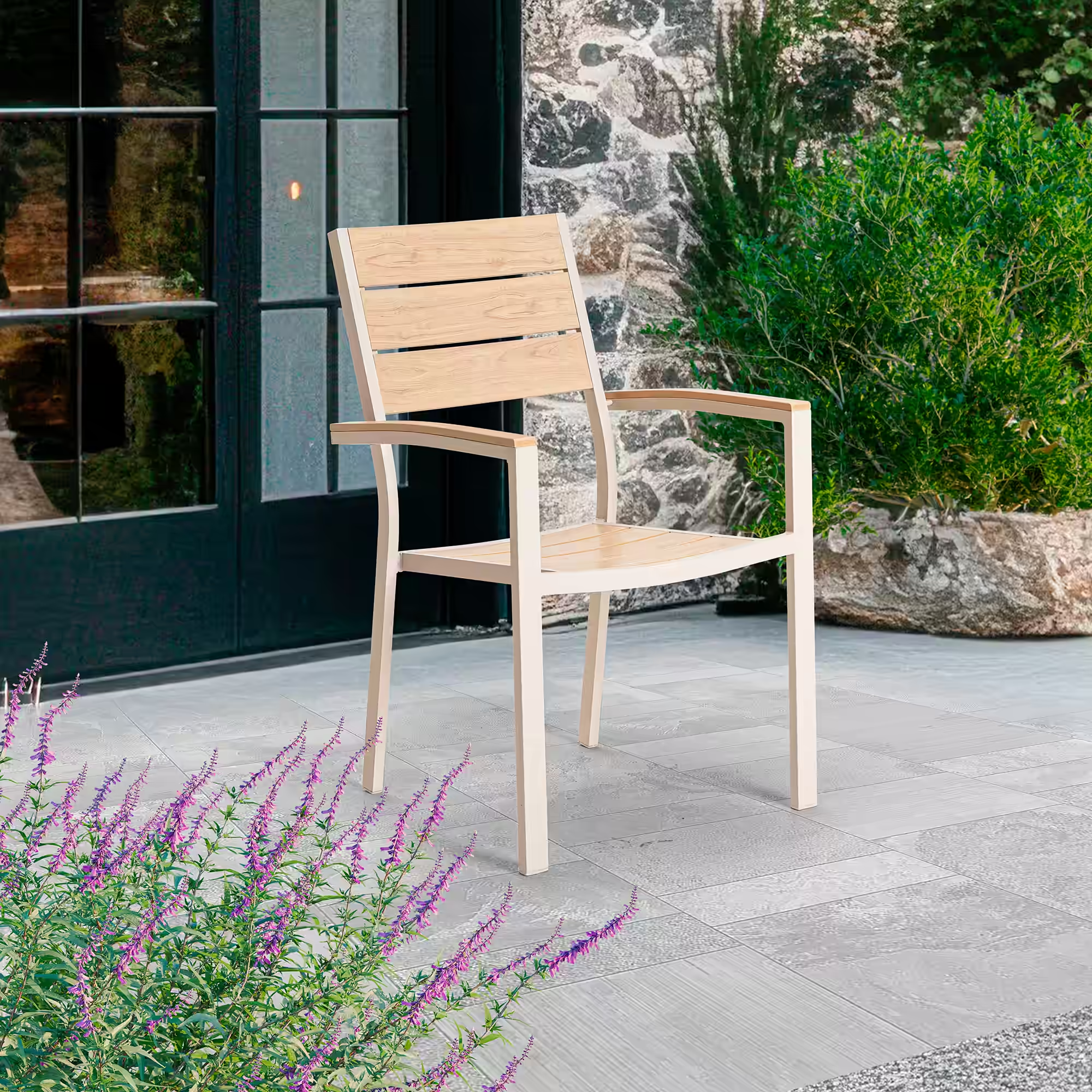
Nonwood appears across 1 product family and 6 options, especially on Outdoor Dining Chairs and Outdoor Dining Tables.
Chemistry and structure
Nonwood is a broad label rather than a precise chemistry. In furniture retail it often means a wood-look composite, polymer-based slat or other substitute selected for weather stability and reduced upkeep.
Because the label is generic, the core engineering question is not only what it looks like but what carries the load beneath it. Many nonwood surfaces depend on a separate metal frame for real structure.
How it behaves in furniture
This type of material is useful outdoors and in easy-care dining furniture where the customer wants a timber-like appearance without the swelling, oiling and seasonal movement of real wood.
The compromise is authenticity and reparability. Composites usually cannot be refinished like solid wood, and thermal expansion can be more noticeable in long dark-coloured sections.
Care and design watch-outs
Moisture and wear note: Often chosen for better weather tolerance than timber, yet joints and supports still matter.
Care note: Treat as a composite surface: mild cleaning, no aggressive sanding and check manufacturer finish notes when available.
Strengths
- lower maintenance than timber
- dimensionally stable look surfaces
- often weather-friendly
Watch-outs
- exact composition may vary
- less repairable than wood
- heat expansion and surface ageing depend on formulation
Browse related products