
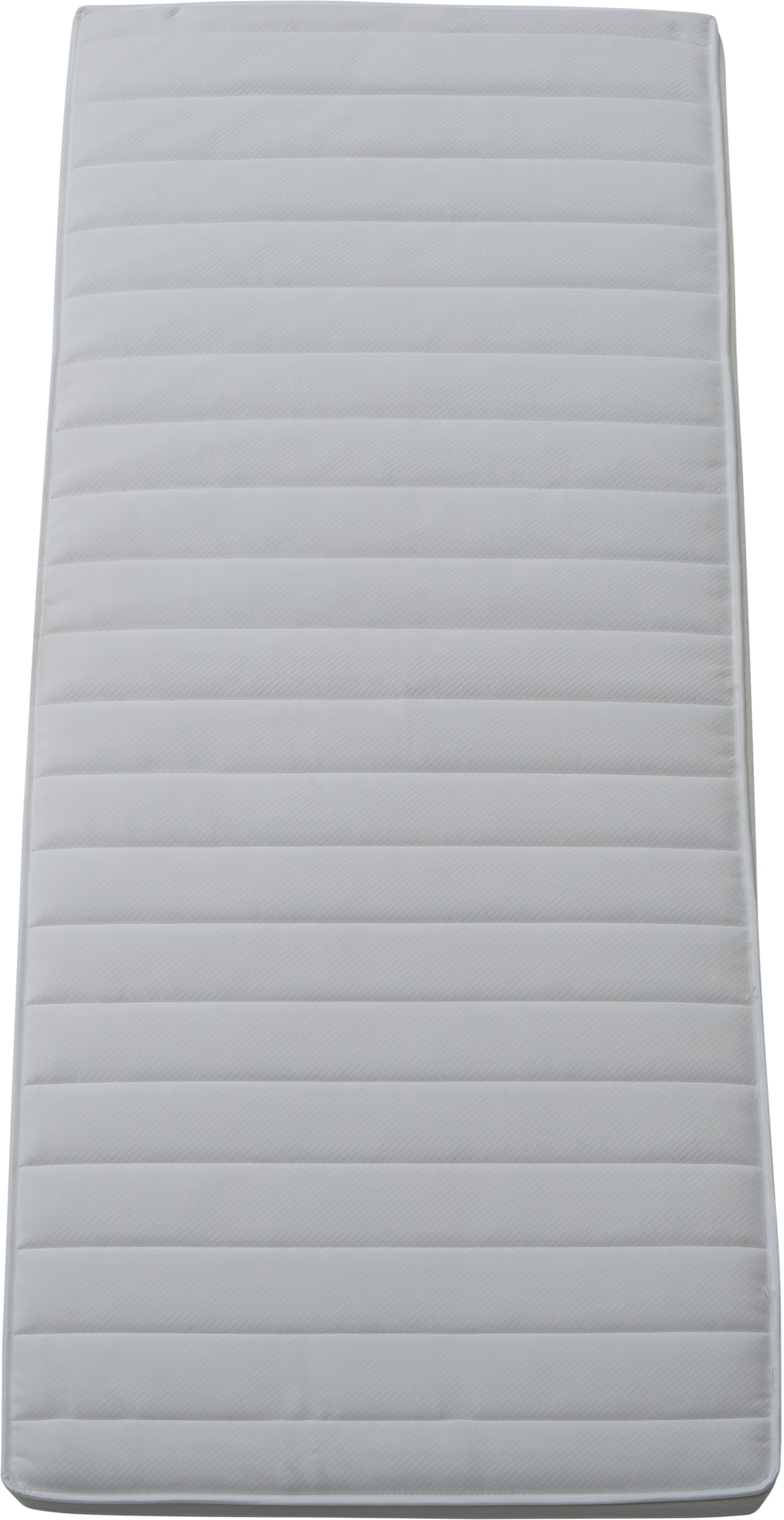
Material guide
Latex
Latex in furniture: Responsive, resilient and comparatively breathable for a foam material.
1 product family
8 options
Latex appears across 1 product family and 8 options, especially on Toppers.
Chemistry and structure
Latex foam is an elastomeric network rather than a typical polyurethane cushion foam. It compresses and rebounds quickly, giving a buoyant feel instead of the slower sink associated with memory foam.
Its cellular structure often allows better airflow than denser viscoelastic foams, which is why latex is popular in toppers and mattresses focused on pressure relief without excessive heat build-up.
How it behaves in furniture
Latex suits sleep products and premium cushioning where resilience, breathability and long-term recovery are priorities. It keeps the body more lifted than memory foam.
The trade-off is weight and cost. It is also more specialised than generic seat foam, so manufacturers usually reserve it for performance comfort layers rather than for every upholstered part.
Thermal and comfort behaviour
Latex usually sleeps cooler than memory foam because the structure rebounds faster and tends to let more air move through the comfort layer.
Compared with spring-led builds, latex still keeps more continuous body contact, but it generally avoids the heat-retaining feel associated with dense viscoelastic foam.
Care and design watch-outs
Moisture and wear note: Open structure allows airflow, but the material should still stay dry and ventilated.
Care note: Protect from strong UV, ozone and heat, which accelerate ageing in elastomer foams.
Strengths
- springy resilience
- good airflow
- durable comfort layer
Watch-outs
- heavier and costlier than standard foam
- sensitive to UV and ozone
- feel may be too buoyant for users who prefer deep sink-in comfort
Recycling and service life
- Recycling in Finland
- Use municipal bulky-furniture or mattress handling unless a local operator explicitly accepts separated latex.
- Expected wear profile
- Generally strong resilience and recovery, with ageing accelerated by UV, ozone and heat.
- Retail warranty note
- Material guidance does not extend the retailer warranty. Unless a product page explicitly states otherwise, keep the practical customer expectation at a 2-year retail warranty window.
Finland-first sorting baseline: latex cores are not a household packaging stream. Direct loose latex layers to municipal bulky-furniture or mixed-furniture handling unless your local operator offers a dedicated mattress-material route.
For complete toppers and mattresses, prioritise reuse first and then use municipal bulky-waste handling if material separation is not supported locally.
Latex is usually more resilient than memory foam and many standard polyurethane foams, especially in premium topper and mattress comfort layers.
UV, ozone, heat and poor storage conditions still accelerate ageing. The practical wear pattern is gradual loss of elasticity rather than instant collapse.
Related specifications
- Latex mattress
- Latex topper
- Resilient comfort layer
Browse related products