Material guide
Glass
Glass in furniture: Hard, non-porous and visually light, with a clean reflective surface.
1 product family
3 options
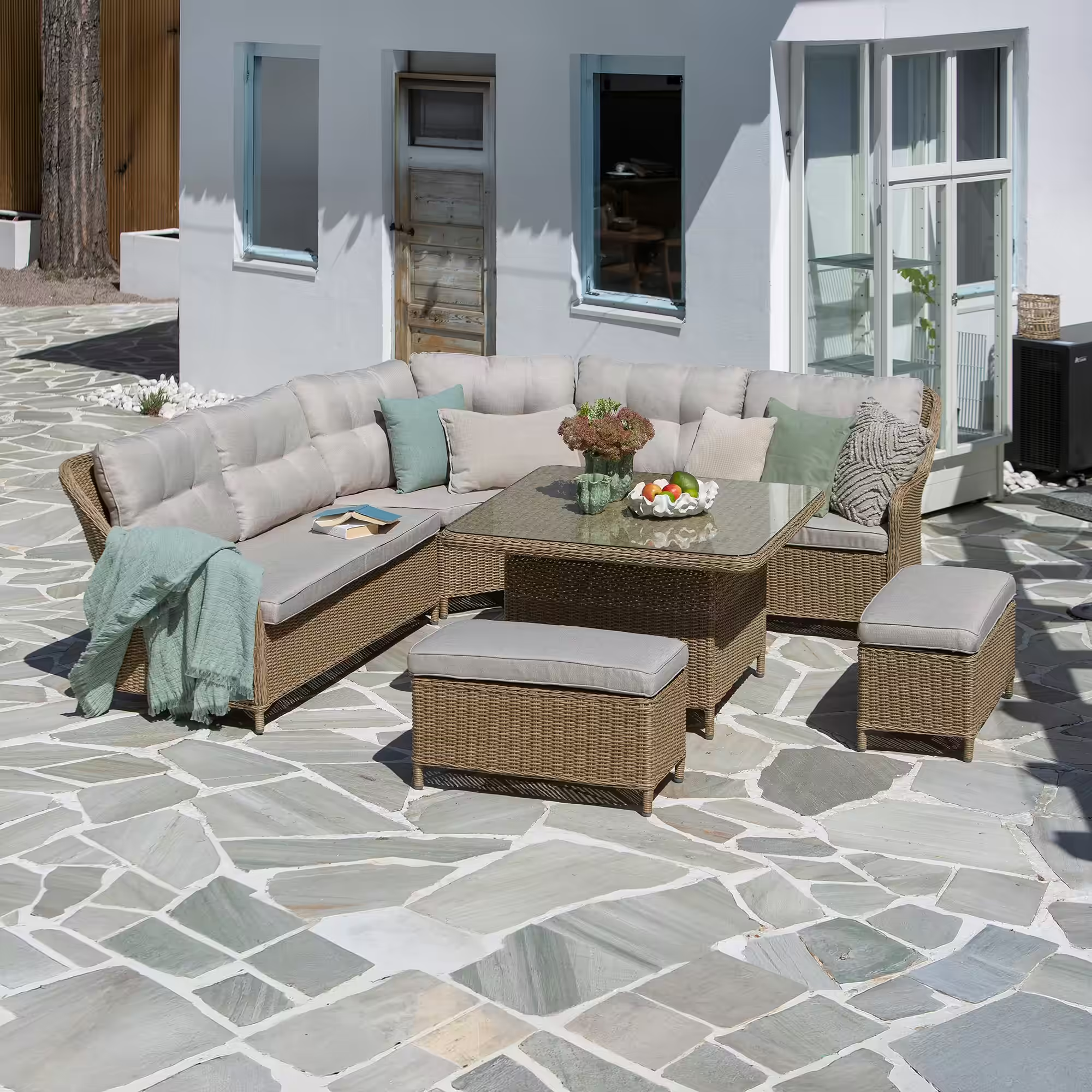
Glass appears across 1 product family and 3 options, especially on Outdoor Dining Tables and Outdoor Lounge Sets.
Chemistry and structure
Glass is a silica-rich material with an amorphous structure rather than a crystalline grain. In furniture it is valued for chemical inertness, easy cleaning and the way it lets light move through a room.
The main engineering issue is brittleness. Tempering improves impact behaviour and safety break pattern, but edge damage remains critical because chips concentrate stress.
How it behaves in furniture
Glass works best on table tops, cabinet doors and shelves where the design wants visual openness and a surface that does not absorb spills or odours.
It is less forgiving in busy households than softer materials. It shows smudges quickly, can feel acoustically hard and should not be mistaken for an impact-proof material.
Care and design watch-outs
Moisture and wear note: Unaffected by humidity, but water spots and fingerprints are visible on glossy finishes.
Care note: Clean with soft cloths and protect exposed edges from point impacts.
Strengths
- easy to clean
- visually light
- moisture proof surface
Watch-outs
- edge chipping risk
- shows fingerprints
- hard reflective surface increases glare and noise
Browse related products